TURCK BI2-G12K-AP6X-H1141 Network Inductive Sensor 4670260
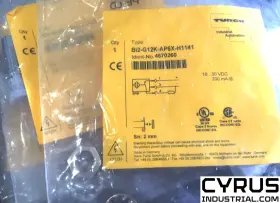
( Brand: Turck ), ( Manufacturer Part Number: BI2-G12K-AP6X-H1141 ), ( Part Type: Sensor ), ( Grade: Manufacturer Network )
Review TURCK Manufacturer Network Inductive Sensor
The Turck BI2-G12K-AP6X-H1141 4670260 is a versatile network inductive sensor designed for reliable and accurate detection of ferromagnetic objects in various industrial applications. This sensor is part of Turck's BTS7-BIO2 series, which offers advanced features and high performance.
The BI2-G12K-AP6X-H1141 sensor comes with a compact and robust design, featuring a stainless steel housing that protects it from harsh environments. Its induction probe has a diameter of 12mm and a length of 60mm, making it suitable for detecting objects with a diameter between 15mm and 50mm.
This sensor operates on the principle of inductive sensing, which means it detects the presence of ferromagnetic objects by measuring the changes in the magnetic field around the probe. It is designed to work with Turck's BIO10 and BIO11 amplifiers, which provide various mounting and connection options and offer a wide measurement range.
The BI2-G12K-AP6X-H1141 sensor is equipped with Turck's patented Auto-Learn technology, which allows it to automatically adjust its sensitivity to different application conditions and object sizes. This feature ensures accurate and consistent detection of ferromagnetic objects, even in the presence of surrounding conductive materials or varying distances between the probe and the object.
Moreover, the sensor supports various communication protocols, including PROFIBUS, PROFINET, and IO-Link, making it easy to integrate it into various automation systems. It also offers a high measurement frequency of up to 1 kHz, enabling fast response times and efficient production processes.
The BI2-G12K-AP6X-H1141 network inductive sensor is a reliable and versatile solution for detecting ferromagnetic objects in various industrial applications, such as conveyor systems, sorting machines, and assembly lines. Its advanced features, compact design, and high performance make it a popular choice among industrial automation professionals.
Pros and Cons of Buying Turck BI2-G12K-AP6X-H1141 Network Inductive Sensor
The Turck BI2-G12K-AP6X-H1141 network inductive sensor is a popular choice for industrial automation applications due to its advanced features and capabilities. However, like any other industrial component, it comes with its own set of advantages and disadvantages. In this analysis, we will explore the pros and cons of purchasing this sensor.
Pros:1. High Precision: The Turck BI2-G12K-AP6X-H1141 sensor offers high precision and accuracy, making it suitable for applications that require precise measurement of metal targets.
2. Network Integration: This sensor is part of the Turck BIS (Basic Industrial Sensing) portfolio, which allows for easy integration into various industrial networks, such as PROFIBUS, PROFINET, and EtherNet/IP.
3. Robust Design: The sensor is designed to withstand harsh industrial environments. It is resistant to shock and vibration, making it an ideal choice for applications where the sensor will be subjected to rough handling or extreme conditions.
4. Versatile Applications: The network inductive sensor can be used in various applications, including level measurement, position sensing, and presence detection.
5. Easy Installation: The sensor can be installed in various orientations, making it flexible for different installation scenarios.
Cons:1. Cost: Compared to traditional analog sensors, network inductive sensors like the Turck BI2-G12K-AP6X-H1141 can be more expensive.
2. Complex Configuration: The sensor requires a more complex configuration process than traditional sensors due to its network capabilities.
3. Requires Power Supply: The sensor requires a power supply, which adds to the overall installation cost and complexity.
4. Sensitivity to Interference: Inductive sensors can be sensitive to electromagnetic interference, which can affect their accuracy.
5. Limited Range: The sensor has a limited measuring range, which may not be suitable for all applications.
Conclusion:In conclusion, the Turck BI2-G12K-AP6X-H1141 network inductive sensor offers several advantages, including high precision, network integration, robust design, versatility, and easy installation. However, it also comes with some disadvantages, such as cost, complexity, power supply requirement, sensitivity to interference, and limited range.
Recommendation:If you are looking for a high-precision sensor with network capabilities for your industrial automation application, the Turck BI2-G12K-AP6X-H1141 network inductive sensor could be a suitable choice. However, it is important to consider the cost, complexity, and installation requirements of the sensor in relation to your specific application and budget. If the sensor's disadvantages outweigh its advantages for your use case, it may be worth considering alternative solutions.
Details:
To SN 29500 Ed. 40 C Switching startled, Yellow For this, they use a high-frequency electromagnetic AC field that interacts with the target. Tightening torque of housing nut10 NM Electrical connection Connector, M12 1 Environmental conditions Ambient temperature-25 70 C Vibration resistance 55 Hz 1mm Shock resistance 30 11 ms Protection classIP67 MTTF2283 years acct.
part #: bi2g12kap6xh1141 price
- $94.00
specifications steppertrol:
- brand: Turck
- mpn: Bi2-g12k-ap6x-h1141
- part type: Sensor
- grade: Manufacturer Network
returns steppertrol:
- paid by: Buyer
- time: 30 Days
- policy: Returns Accepted
- method: Money back
offer steppertrol:
- quantity: 1
- options: Ship-to-home
- sold: 0
- started: April 20, 2026
- availability: In Stock
seller steppertrol:
- # reviews: 1851
- city: Chicago, Illinois
- rating: 100.0%
payments steppertrol:
- other
- credit card: Mastercard
- wallet: Apple-pay
shipping steppertrol:
- carrier: UPS
- class: Standard, Expedited, One-day
- cost: $15.79
- type: Calculated
- transit: 3-8 Days
- service: UPS Ground, UPS 2nd Day Air, UPS Next Day Air Saver, UPS Next Day Air
general steppertrol:
- condition: New
- Drives Starters > Drives Motor Controls > Stepper Controls Drives
Turck BI2-G12K-AP6X-H1141 Is Similar To:
- Turck Bi5-m18-az3x 43104 Manufacturer Network Inductive Sensor With Increased Swit (70.6% similar) Part #: Turck BI5-M18-AZ3X for sale...(April 24th, 2026)
