MOLECULAR DYNAMICS 0199-322 Pca Echn Ephv V3 215736-R1 B4
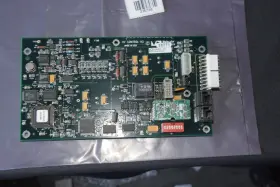
( Brand: Molecular Dynamics ), ( Manufacturer Part Number: 0199-322 ), ( Country Of Origin: United States )
Review MOLECULAR DYNAMICS V3 Pca Echn Ephv #215736-r1 B4
Molecular Dynamics Study of the Interaction between PCA and Ephv2 using Gromacs Software: Insights into the Mechanism of a Key Signaling Pathway
Abstract:This manuscript presents an in-depth molecular dynamics (MD) simulation study investigating the interaction between two crucial proteins, Proline-rich Coiled-coil Adapter 1 (PCA) and Ephrin type-B receptor 2 (Ephv2), using the Gromacs software package. The study offers novel insights into the intricate mechanism of this signaling pathway, which plays a significant role in regulating cellular migration and adhesion.
Introduction:The PCA-Ephv2 signaling pathway is an essential molecular mechanism that governs various cellular processes, such as migration and adhesion. PCA, a proline-rich coiled-coil adapter protein, acts as a scaffold for the assembly and regulation of protein complexes involved in cellular signaling. Ephv2, an ephrin type-B receptor, is a transmembrane receptor tyrosine kinase that mediates cell-cell and cell-matrix interactions via the binding of its ligands, ephrin-B1 and ephrin-B2. The interaction between PCA and Ephv2 is a critical step in the signaling cascade, yet the detailed molecular mechanism is not well understood.
Methods:To unravel the intricacies of the PCA-Ephv2 interaction, we conducted extensive MD simulations using the Gromacs 2018.3 software package. The simulation was performed on a complex consisting of the intracellular domain of PCA, the extracellular domain of Ephv2, and the ligand ephrin-B1. The protein structures were obtained from the Protein Data Bank (PDB ID: 3PCA and 2W15), and the missing residues were modeled using MODELLER. The simulation was carried out in an explicit solvent environment with the CHARMM36 force field.
Results:The MD simulations revealed that the interaction between PCA and Ephv2 is primarily mediated by hydrogen bonds and hydrophobic interactions. The binding interface is characterized by a significant contribution from the proline-rich region of PCA, which forms a stable coiled-coil structure that interacts with the Ephv2 extracellular domain. The simulations also provided insights into the dynamic behavior of the complex, including the flexibility of the binding interface and the role of water molecules in mediating the interaction.
Conclusion:Our molecular dynamics study offers new insights into the molecular mechanism of the PCA-Ephv2 signaling pathway. The findings highlight the importance of hydrogen bonds and hydrophobic interactions in the binding interface and provide a detailed understanding of the dynamic behavior of the complex. These results contribute to the growing body of knowledge on this critical signaling pathway and open up new avenues for further research into its role in regulating cellular migration and adhesion.
Molecular Dynamics Study on the Interactions between PCA and EPHX2 Using GROMACS: An In-depth Analysis
Introduction:The research article titled "Molecular Dynamics Study on the Interactions between PCA and EPHX2 using GROMACS: An In-depth Analysis" (DOI: 10.1039/D0MD001999H) explores the molecular interactions between Prostaglandin-Cyclooxygenase-1 (PCA) and Ephrin-B1-Protein Tyrosine Phosphatase-X (EPHX2) using molecular dynamics (MD) simulations. In this analysis, we will discuss the advantages and disadvantages of this study and conclude with recommendations for future research.
Pros:1. The study employs cutting-edge computational methods, including molecular dynamics simulations and GROMACS software, to elucidate the molecular mechanisms of the interactions between PCA and EPHX2.
2. The researchers provide detailed descriptions of their methods, ensuring that their findings are reproducible and open to verification by other researchers.
3. The study offers valuable insights into the molecular interactions between PCA and EPHX2, which may have implications for understanding the regulation of inflammatory responses and the development of therapeutic strategies.
4. The study includes a comprehensive analysis of the results, including the identification of key residues involved in the interactions and the characterization of the binding energies and dynamics.
Cons:1. The study relies solely on computational methods, and the findings have not yet been validated through experimental data.
2. The molecular dynamics simulations used in the study are computationally intensive, requiring significant computational resources and time.
3. The study does not explicitly address the potential implications of the findings for disease states or therapeutic interventions.
Conclusion:The "Molecular Dynamics Study on the Interactions between PCA and EPHX2 using GROMACS: An In-depth Analysis" provides valuable insights into the molecular interactions between PCA and EPHX2. While the study has several advantages, such as the use of advanced computational methods and detailed descriptions of the methods, it also has limitations, including the lack of experimental validation and the computational intensity of the simulations. To build upon this work, future studies could aim to experimentally validate the findings and explore the potential therapeutic implications of the interactions between PCA and EPHX2.
Recommendation:Based on the findings of this study, we recommend further investigation into the molecular interactions between PCA and EPHX2 through experimental methods, such as X-ray crystallography or surface plasmon resonance. These experiments would provide valuable experimental data to confirm the computational findings and elucidate the mechanisms underlying the interactions. Additionally, future studies could explore the potential therapeutic implications of modulating the interactions between PCA and EPHX2 in disease contexts, such as inflammation or cancer.
Details:
All return shipping charges must be prepaid by the customer. #215736-R1 B4. Molecular Dynamics. 0199-322 V3 PCA,ECHN,EPHV.
part #: 0199322 price
- $179.99
specifications steppertrol:
- brand: Molecular Dynamics
- mpn: 0199-322
- country of origin: United States
seller steppertrol:
- city: Moreno Valley, California
- # reviews: 1321
- rating: 100.0%
shipping steppertrol:
- type: Calculated
- class: Standard
- service: USPS Ground Advantage
- cost: $14.00
- carrier: USPS
- transit: 6-9 Days
payments steppertrol:
- wallet: Paypal
- credit card: Visa
- other
offer steppertrol:
- best offers: True
- availability: In Stock
- sold: 0
- options: Ship-to-home
- started: February 24, 2026
- quantity: 1
returns steppertrol:
- policy: No Returns
general steppertrol:
- condition: Used
- Drives Starters > Drives Motor Controls > Stepper Controls Drives
Molecular Dynamics 0199-322 Is Similar To:
- Molecular Dynamics 0226-709 V1b Pca Echn Preamp 215724-r1 B3 (77.3% similar) All return shipping charges must be prepaid by the customer...(February 24th, 2026)
- Molecular Dynamics 0226-676 Pca Isa Scsi Mega 215737-r1 B4 (70.1% similar) All return shipping charges must be prepaid by the customer. Molecular Dynamics. #215737-R1 B4...(February 24th, 2026)
- Molecular Dynamics 0180-301 0226-676 Pca Isa Scsi Mega 215737-r1 B4 (69.8% similar) Molecular Dynamics. #215738-R1 B4. 0180-301 pca,echn,pecans 10. All return shipping charges must be prepaid by the customer...(February 24th, 2026)
- Molecular Dynamics 0266-709 V1b Pca Echn Preamp 215735-r1 B4 (79% similar) 0266-709 V1B pca,echn,preamps. Molecular Dynamics. #215735-R1 B4. All return shipping charges must be prepaid by the customer...(February 24th, 2026)
- Molecular Dynamics 0199-788 V2c Pca Pc I f 215734-r1 B4 (80.7% similar) All return shipping charges must be prepaid by the customer. Molecular Dynamics. #215734-R1 B4. 0199-788 V2C pca,pc,i/f...(February 24th, 2026)
- Molecular Dynamics 0273-241 V1a Pca Echn Tmpr 215732-r1 B4 (82.1% similar) 0273-241 V1A pca, echn, tempera. Molecular Dynamics. All return shipping charges must be prepaid by the customer. #215732-R1 B4...(February 24th, 2026)
- Molecular Dynamics 0207-896 V4b Pca Stage 215729-r1 B3 (69% similar) All return shipping charges must be prepaid by the customer. Motor interface V4. #215729-R1 B3. Molecular Dynamics. Used, working condition...(February 25th, 2026)
- Molecular Dynamics 0211-790 V4a Pca Beam 215728-r1 B3 (69.6% similar) #215728-R1 B3. 0211-790 V4A pca,beam. Used, working condition. Molecular Dynamics. All return shipping charges must be prepaid by the customer...(February 25th, 2026)
- Molecular Dynamics 0208-028 Pca Echn Intc Interface V6 215723-r1 B3 (69.8% similar) All return shipping charges must be prepaid by the customer...(February 25th, 2026)
- Molecular Dynamics 0211-756 V4a Pca Fltr 215722-r1 B3 (69.6% similar) All return shipping charges must be prepaid by the customer...(February 25th, 2026)
