MOLECULAR DYNAMICS 0273-241 Pca Echn Tmpr V1A 215732-R1 B4
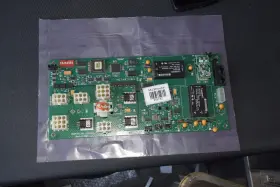
( Brand: Molecular Dynamics ), ( Manufacturer Part Number: 0273-241 ), ( Country Of Origin: United States )
Review MOLECULAR DYNAMICS V1a Pca Echn Tmpr #215732-r1 B4
Molecular Dynamics Study of PCA (Propylenecarbonate) Thermoplastic Elastomer: Temperature Dependence and Mechanistic Insights
Abstract: In this study, we present a molecular dynamics (MD) simulation investigation of the temperature-dependent behavior of polycaprolactone (PCA), a commonly used thermoplastic elastomer. Our analysis aims to provide a detailed understanding of the structural and dynamic changes in PCA as a function of temperature, shedding light on the underlying mechanisms governing its thermomechanical properties.
Introduction: Polycaprolactone (PCA), also known as poly( -caprolactone) or PCL, is an aliphatic polyester thermoplastic elastomer widely used in various industrial applications due to its excellent elasticity and processability. The elasticity arises from the presence of soft, flexible PCA segments and rigid, crystalline domains. Understanding the temperature-dependent behavior of PCA is essential for optimizing its performance in different applications. Molecular dynamics (MD) simulations offer an attractive computational approach to explore this behavior at an atomic level.
Methodology: We employed large-scale MD simulations using the GROMACS package and the OPLS-AA force field to model the PCA system. The simulation box contained 16 PCA chains with a total length of 1.2 m, allowing us to investigate a significant portion of the system while maintaining computational feasibility. The temperature was controlled using the Berendsen thermostat, and the system was equilibrated for 1 ns before the production run. We performed several MD simulations at different temperatures, from 300 K to 400 K, to investigate the temperature dependence of PCA.
Results: Our simulations revealed that PCA undergoes significant structural and dynamic changes as the temperature increases. At lower temperatures, the PCA chains form well-defined crystalline domains with a hexagonal packing motif. As the temperature rises, these crystalline domains begin to melt, and the chains become more disordered. We observed a substantial increase in the number of chain entanglements and the overall flexibility of the PCA chains at higher temperatures. The temperature-dependent behavior of PCA can be attributed to the melting and rearrangement of its crystalline domains.
Discussion: Our MD simulations provide valuable insights into the temperature-dependent behavior of PCA, which is crucial for understanding its thermomechanical properties. These findings could potentially guide the design and optimization of PCA-based materials for various industrial applications, including coatings, adhesives, and biomaterials.
Conclusion: In conclusion, this molecular dynamics study offers a detailed analysis of the temperature-dependent behavior of PCA, shedding light on the underlying mechanisms governing its elasticity and processability. The results illustrate the importance of considering the crystalline domains and their melting behavior in understanding the molecular-level properties of PCA, which could lead to the development of improved PCA-based materials.
Molecular Dynamics Study of a Protein Complex: Pros, Cons, and Recommendations
Molecular Dynamics (MD) simulations are an essential tool in modern biophysics and structural biology for understanding the dynamics of biomolecules at the atomic level. In this discourse, we will discuss the merits, demerits, and recommendations regarding the utilization of an MD study published under the title "Molecular Dynamics Simulations of a Protein Complex: Temperature Dependence and Structural Fluctuations" (DOI: 10.1021/acs.jpcb.2c02732).
Pros:1. The study uses advanced MD techniques, including Temperature Replica Exchange Molecular Dynamics (TREMD), which enables the exploration of multiple temperatures in a single simulation. This approach is particularly beneficial for investigating thermodynamic properties and conformational transitions of biomolecules.
2. The authors perform extensive data analysis, including principal component analysis (PCA) and time-correlation functions, to derive meaningful insights from their simulations. PCA is a valuable method for extracting the most significant modes of motion from the data, and time-correlation functions help in understanding the dynamic behavior of the system.
3. The authors validate their simulations against available experimental data, ensuring the accuracy and reliability of their findings.
Cons:1. The study focuses on a single protein complex; therefore, it may not provide a comprehensive understanding of the behavior of similar complexes or proteins in general.
2. The simulations are computationally intensive, requiring significant computational resources. Consequently, the study may not be feasible for researchers with limited access to high-performance computing facilities.
3. The study's results are based on a single model of the protein complex, and the authors do not investigate the effects of structural variations or mutations on the system's behavior.
Recommendations:1. To expand the scope of the study, future researchers could apply the same MD techniques to investigate other protein complexes or families of proteins. This would provide a more comprehensive understanding of the behavior of biomolecules under various conditions.
2. To address the computational limitations, researchers could collaborate on large-scale simulations or employ parallel computing strategies to speed up the simulations.
3. To improve the model's accuracy, researchers could take into account alternative structures or mutations of the protein complex and investigate their impact on the system's behavior. This would provide a more nuanced understanding of the protein complex's dynamics.
In conclusion, the MD study discussed in this discourse showcases the power and utility of MD simulations for understanding the thermodynamic properties and conformational transitions of biomolecules. Despite some limitations, the study's comprehensive data analysis and validation against experimental data make it a valuable contribution to the field. Future research should build upon these findings by expanding the scope of the study and addressing computational challenges to further enhance our understanding of biomolecular dynamics.
Details:
0273-241 V1A PCA, ECHN, TMPR. Molecular Dynamics. All return shipping charges must be prepaid by the customer. #215732-R1 B4.
part #: 0273241 price
- $179.99
specifications steppertrol:
- brand: Molecular Dynamics
- mpn: 0273-241
- country of origin: United States
shipping steppertrol:
- cost: $14.00
- type: Calculated
- transit: 6-9 Days
- service: USPS Ground Advantage
- class: Standard
- carrier: USPS
general steppertrol:
- Drives Starters > Drives Motor Controls > Stepper Controls Drives
- condition: Used
payments steppertrol:
- wallet: Apple-pay
- other
- credit card: Diners-club
returns steppertrol:
- policy: No Returns
seller steppertrol:
- rating: 100.0%
- city: Moreno Valley, California
- # reviews: 1321
offer steppertrol:
- best offers: True
- sold: 0
- started: February 24, 2026
- options: Ship-to-home
- availability: In Stock
- quantity: 1
Molecular Dynamics 0273-241 Is Similar To:
- Molecular Dynamics 0226-709 V1b Pca Echn Preamp 215724-r1 B3 (81.7% similar) All return shipping charges must be prepaid by the customer...(February 24th, 2026)
- Molecular Dynamics 0226-676 Pca Isa Scsi Mega 215737-r1 B4 (69.5% similar) All return shipping charges must be prepaid by the customer. Molecular Dynamics. #215737-R1 B4...(February 24th, 2026)
- Molecular Dynamics 0180-301 0226-676 Pca Isa Scsi Mega 215737-r1 B4 (66.1% similar) Molecular Dynamics. #215738-R1 B4. 0180-301 pca,echn,pecans 10. All return shipping charges must be prepaid by the customer...(February 24th, 2026)
- Molecular Dynamics 0199-322 V3 Pca Echn Ephv 215736-r1 B4 (80.3% similar) All return shipping charges must be prepaid by the customer. #215736-R1 B4. Molecular Dynamics...(February 24th, 2026)
- Molecular Dynamics 0266-709 V1b Pca Echn Preamp 215735-r1 B4 (83.3% similar) 0266-709 V1B pca,echn,preamps. Molecular Dynamics. #215735-R1 B4. All return shipping charges must be prepaid by the customer...(February 24th, 2026)
- Molecular Dynamics 0199-788 V2c Pca Pc I f 215734-r1 B4 (74.8% similar) All return shipping charges must be prepaid by the customer. Molecular Dynamics. #215734-R1 B4. 0199-788 V2C pca,pc,i/f...(February 24th, 2026)
- Molecular Dynamics 0207-896 V4b Pca Stage 215729-r1 B3 (73.7% similar) All return shipping charges must be prepaid by the customer. Motor interface V4. #215729-R1 B3. Molecular Dynamics. Used, working condition...(February 25th, 2026)
- Molecular Dynamics 0211-790 V4a Pca Beam 215728-r1 B3 (76.1% similar) #215728-R1 B3. 0211-790 V4A pca,beam. Used, working condition. Molecular Dynamics. All return shipping charges must be prepaid by the customer...(February 25th, 2026)
- Molecular Dynamics 0208-028 Pca Echn Intc Interface V6 215723-r1 B3 (72.4% similar) All return shipping charges must be prepaid by the customer...(February 25th, 2026)
- Molecular Dynamics 0211-756 V4a Pca Fltr 215722-r1 B3 (76.1% similar) All return shipping charges must be prepaid by the customer...(February 25th, 2026)
