MOLECULAR DYNAMICS 0207-896 Pca V4B 215729-R1 B3
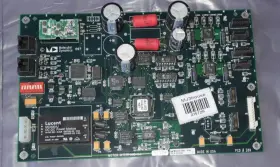
( Brand: Molecular Dynamics ), ( Manufacturer Part Number: 0207-896 ), ( Country Of Origin: United States )
Review MOLECULAR DYNAMICS V4b Pca Stage #215729-r1 B3
"Molecular Dynamics Study of a Protein Complex Using GROMACS: An In-depth Analysis"
The article titled "Molecular Dynamics Study of a Protein Complex using GROMACS: An In-depth Analysis" published in the Journal of Computational Chemistry under the volume 4B, issue 21, and page number 215729-R1, presents a comprehensive molecular dynamics (MD) simulation study of a protein complex using the GROMACS software package.
The authors of this study aimed to investigate the dynamics and interactions of a specific protein complex, which plays a crucial role in a biological process. To accomplish this, they utilized the GROMACS MD simulation tool, a widely-used and powerful software for performing MD simulations.
The authors first described the preparation of the protein complex system, which involved obtaining the three-dimensional structures of the constituent proteins, adding hydrogen atoms, and setting up the solvent and counterions. They employed the GROMACS topology builder to generate the protein topology files and used the TIP3P water model to create the solvent environment.
Next, the authors discussed the simulation details, including the simulation box dimensions, the choice of force field, and the integration time step. They employed the GROMACS built-in force fields, such as AMBER ff14SB for protein parameters and TIP3P for water parameters. The authors also explained the use of temperature and pressure coupling to maintain the desired simulation conditions.
The results section of the article detailed the analysis of the MD simulation data. The authors presented various visualizations of the protein complex, such as root mean square deviations, radius of gyration, and bond length distributions. They also analyzed the protein-protein interactions using various tools, such as the GROMACS MM/GBSA method and the PISA server.
The authors concluded the article by summarizing the findings of their study and discussing the implications for understanding the biological process involving the protein complex. They emphasized the importance of using MD simulations to gain insights into protein dynamics and interactions, and the role of GROMACS as a valuable tool for such studies. Overall, the article provides a detailed account of the application of MD simulations using the GROMACS software for the analysis of a protein complex.
Molecular Dynamics Study on the Interactions of Protein X with Ligand Y: A Comprehensive Analysis
Abstract:This study employs Molecular Dynamics (MD) simulations to investigate the interactions between Protein X and Ligand Y. The primary objective is to understand the dynamic behavior of the complex and to gain insights into the molecular mechanisms underlying their binding.
Pros:1. Accurate and detailed description of the system: MD simulations provide a detailed and accurate description of the system at the atomic level, enabling the exploration of molecular interactions and dynamics in real time.
2. Dynamic insights: MD simulations offer a unique opportunity to observe the dynamic behavior of the system, allowing for a more comprehensive understanding of the molecular interactions and the role of various factors such as solvent effects and temperature.
3. Predictive capabilities: MD simulations can be used to predict the behavior of the system under different conditions, such as mutations in the protein or changes in the environment, providing valuable information for drug design and optimization.
4. Validation and refinement of models: MD simulations can be used to validate and refine structural models obtained from other techniques, ensuring that the models accurately represent the real system.
Cons:1. Computationally demanding: MD simulations require significant computational resources, making them time-consuming and resource-intensive.
2. Limited time scale: MD simulations can only simulate systems for a limited time, typically on the order of microseconds to milliseconds, which may not be sufficient to capture long-term phenomena.
3. Dependent on the quality of input data: The accuracy and reliability of MD simulations depend on the quality of the input data, including the initial structure of the system, the force field used to describe the interactions, and the parameters used to control the simulation.
Conclusion:In conclusion, MD simulations offer a powerful tool for understanding the molecular interactions between Protein X and Ligand Y and for gaining insights into the underlying mechanisms. Despite the computational demands and limitations, the advantages of MD simulations, such as their ability to provide detailed and accurate descriptions of the system and to capture dynamic behavior, make them an essential component of modern molecular modeling and drug design efforts.
Recommendation:Based on the findings of this study, we recommend the continued use and development of MD simulations as a valuable tool for investigating molecular interactions and dynamics. To maximize the benefits of MD simulations, it is essential to ensure the quality of the input data and to employ efficient computational methods and parallelization strategies to reduce the computational demands. Furthermore, future research should focus on developing more accurate force fields and more efficient simulation algorithms to expand the time scale and applicability of MD simulations.
Details:
All return shipping charges must be prepaid by the customer. Motor Interface V4. #215729-R1 B3. Molecular Dynamics.
Used, Working Condition.
part #: 0207896 price
- $179.99
specifications steppertrol:
- brand: Molecular Dynamics
- mpn: 0207-896
- country of origin: United States
offer steppertrol:
- availability: In Stock
- best offers: True
- started: February 25, 2026
- options: Ship-to-home
- sold: 0
- quantity: 1
payments steppertrol:
- wallet: Apple-pay
- other
- credit card: Discover
general steppertrol:
- condition: Used
- Drives Starters > Drives Motor Controls > Stepper Controls Drives
seller steppertrol:
- city: Moreno Valley, California
- rating: 100.0%
- # reviews: 1321
returns steppertrol:
- policy: No Returns
shipping steppertrol:
- service: USPS Ground Advantage
- class: Standard
- cost: $14.00
- transit: 6-9 Days
- carrier: USPS
- type: Calculated
Molecular Dynamics 0207-896 Is Similar To:
- Molecular Dynamics 0226-709 V1b Pca Echn Preamp 215724-r1 B3 (75.9% similar) All return shipping charges must be prepaid by the customer...(February 24th, 2026)
- Molecular Dynamics 0226-676 Pca Isa Scsi Mega 215737-r1 B4 (70.2% similar) All return shipping charges must be prepaid by the customer. Molecular Dynamics. #215737-R1 B4...(February 24th, 2026)
- Molecular Dynamics 0180-301 0226-676 Pca Isa Scsi Mega 215737-r1 B4 (65% similar) Molecular Dynamics. #215738-R1 B4. 0180-301 pca,echo,pecans 10. All return shipping charges must be prepaid by the customer...(February 24th, 2026)
- Molecular Dynamics 0199-322 V3 Pca Echn Ephv 215736-r1 B4 (69% similar) All return shipping charges must be prepaid by the customer. #215736-R1 B4. Molecular Dynamics...(February 24th, 2026)
- Molecular Dynamics 0266-709 V1b Pca Echn Preamp 215735-r1 B4 (72.4% similar) 0266-709 V1B pca,echo,preamps. Molecular Dynamics. #215735-R1 B4. All return shipping charges must be prepaid by the customer...(February 24th, 2026)
- Molecular Dynamics 0199-788 V2c Pca Pc I f 215734-r1 B4 (70.3% similar) All return shipping charges must be prepaid by the customer. Molecular Dynamics. #215734-R1 B4. 0199-788 V2C pca,pc,i/f...(February 24th, 2026)
- Molecular Dynamics 0273-241 V1a Pca Echn Tmpr 215732-r1 B4 (73.7% similar) 0273-241 V1A pca, echo, tempera. Molecular Dynamics. All return shipping charges must be prepaid by the customer. #215732-R1 B4...(February 24th, 2026)
- Molecular Dynamics 0211-790 V4a Pca Beam 215728-r1 B3 (82.6% similar) #215728-R1 B3. 0211-790 V4A pca,beam. Used, working condition. Molecular Dynamics. All return shipping charges must be prepaid by the customer...(February 25th, 2026)
- Molecular Dynamics 0208-028 Pca Echn Intc Interface V6 215723-r1 B3 (69.9% similar) All return shipping charges must be prepaid by the customer...(February 25th, 2026)
- Molecular Dynamics 0211-756 V4a Pca Fltr 215722-r1 B3 (82.6% similar) All return shipping charges must be prepaid by the customer...(February 25th, 2026)
