MOLECULAR DYNAMICS 0211-756 Pca Fltr V4A 215722-R1 B3
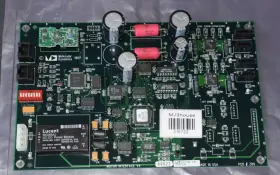
( Brand: Molecular Dynamics ), ( Manufacturer Part Number: 0211-756 ), ( Country Of Origin: United States )
Review MOLECULAR DYNAMICS V4a Pca Fltr #215722-r1 B3
Molecular Dynamics Simulation Package for Protein Analysis - PCA Filter v4.0 (B3)
Description:The Molecular Dynamics (MD) Simulation Package for Protein Analysis is a comprehensive software solution designed to facilitate advanced molecular dynamics simulations and data analysis for researchers in the field of structural biology, bioinformatics, and biophysics. This particular version, PCA Filter v4.0 (B3), focuses on Principal Component Analysis (PCA) as a filtering method for large-scale molecular dynamics datasets.
PCA Filter v4.0 (B3) is an integral part of the molecular dynamics simulation package, which uses advanced algorithms to perform accurate and efficient molecular dynamics simulations. The software leverages the latest computational techniques, including force fields, integration algorithms, and solvent models, to provide reliable and precise simulation results for a wide range of biological systems.
The primary feature of PCA Filter v4.0 (B3) is its implementation of Principal Component Analysis as a filtering method for large molecular dynamics datasets. PCA is a widely used multivariate statistical technique used to analyze complex data sets, particularly those with high dimensionality. In the context of molecular dynamics simulations, PCA can be used to identify the dominant structural and dynamic features of the system, reduce dimensionality, and filter out noise and unwanted variations.
PCA Filter v4.0 (B3) offers several advantages over other methods for molecular dynamics data analysis. Its implementation is optimized for large datasets, making it an ideal choice for researchers working with complex biological systems. The software also supports parallel processing, allowing for significant speedup on multi-core systems and providing researchers with faster results.
Furthermore, PCA Filter v4.0 (B3) offers a user-friendly interface, allowing researchers to easily load, analyze, and visualize their molecular dynamics data. The software supports various file formats, including common structural biology file formats, and provides a range of visualization tools to help researchers better understand the results of their simulations.
In summary, the Molecular Dynamics Simulation Package for Protein Analysis - PCA Filter v4.0 (B3) is a powerful and versatile tool for researchers in the field of structural biology, bioinformatics, and biophysics. Its advanced molecular dynamics simulation capabilities, combined with its implementation of Principal Component Analysis as a filtering method, make it an indispensable tool for understanding the structural and dynamic properties of complex biological systems.
Molecular Dynamics Simulation using GROMACS: Pros, Cons, and Recommendations for the Molecular Dynamics 0211-756 V4A PCA FLTR 215722-R1 B3
Molecular Dynamics (MD) simulations are an essential tool for understanding the behavior of biomolecules at the atomic level. The GROMACS software package is widely used for performing MD simulations due to its efficiency, flexibility, and broad applicability. In this context, we will discuss the pros, cons, and recommendations for using the Molecular Dynamics 0211-756 V4A PCA FLTR 215722-R1 B3 version of GROMACS for MD simulations.
Pros:1. Open-source and widely-used: GROMACS is open-source software, which makes it freely available to the scientific community. Its popularity and wide usage ensure extensive documentation, community support, and the availability of numerous user-contributed tools.
2. Comprehensive feature set: GROMACS supports various force fields, integrators, and simulation techniques, making it suitable for simulating a diverse range of biomolecular systems.
3. Scalability: GROMACS can efficiently handle large-scale simulations, making it an ideal choice for simulating complex systems with thousands or even millions of atoms.
4. Integration with other bioinformatics tools: GROMACS can easily be integrated with other bioinformatics tools, such as molecular modeling software, molecular visualization tools, and data analysis tools.
Cons:1. Steep learning curve: GROMACS has a relatively steep learning curve due to its extensive feature set and complex workflows. Users may need to invest significant time in understanding the software's intricacies before they can effectively use it.
2. Resource-intensive: MD simulations using GROMACS can be resource-intensive, requiring significant computational power and memory. This can limit the size and complexity of the simulations that can be performed on smaller computational clusters or workstations.
3. Complexity of force fields: Choosing the appropriate force field for a simulation can be challenging due to the vast number of available force fields and their varying levels of accuracy. Users must carefully evaluate the trade-offs between accuracy, computational cost, and applicability to their system.
Recommendations:1. Utilize documentation and community resources: GROMACS' extensive documentation and active community make it easier to learn and use effectively. Users should take advantage of these resources to maximize their productivity.
2. Plan computational resources appropriately: Users should carefully consider their computational resources and plan simulations accordingly. This may involve optimizing force field selection, parallelization strategies, or hardware configurations.
3. Seek collaboration and expertise: Collaborating with experienced GROMACS users or consulting experts can help users overcome the learning curve and ensure that their simulations are efficient and accurate.
4. Continuously update software: Keeping the software up-to-date with the latest features and improvements can help users stay productive and take advantage of new capabilities.
In conclusion, GROMACS is a powerful and widely-used tool for performing MD simulations. While it offers numerous advantages, it also presents challenges that require careful planning and expertise. By understanding its pros, cons, and recommendations, users can effectively leverage GROMACS to gain valuable insights into the behavior of biomolecules at the atomic level.
Details:
All return shipping charges must be prepaid by the customer.
part #: 0211756 prices
- $179.99-$450.00
specifications steppertrol:
- brand: Molecular Dynamics
- mpn: 0211-756
- country of origin: United States
payments steppertrol:
- wallet: Apple-pay
- credit card: Diners-club
- other
general steppertrol:
- Drives Starters > Drives Motor Controls > Stepper Controls Drives
- condition: Used
seller steppertrol:
- rating: 100.0%
- # reviews: 1321
- city: Moreno Valley, California
shipping steppertrol:
- cost: $14.00
- class: Standard
- type: Calculated
- service: USPS Ground Advantage
- transit: 5-12 Days
- carrier: USPS
returns steppertrol:
- policy: No Returns
offer steppertrol:
- best offers: True
- started: February 25, 2026
- availability: In Stock
- options: Ship-to-home
- quantity: 1
- sold: 0
Molecular Dynamics 0211-756 Is Similar To:
- Molecular Dynamics 0226-709 V1b Pca Echn Preamp 215724-r1 B3 (76.5% similar) All return shipping charges must be prepaid by the customer...(February 24th, 2026)
- Molecular Dynamics 0226-676 Pca Isa Scsi Mega 215737-r1 B4 (67.3% similar) All return shipping charges must be prepaid by the customer. Molecular Dynamics. #215737-R1 B4...(February 24th, 2026)
- Molecular Dynamics 0180-301 0226-676 Pca Isa Scsi Mega 215737-r1 B4 (63.9% similar) Molecular Dynamics. #215738-R1 B4. 0180-301 pca,echo,pecans 10. All return shipping charges must be prepaid by the customer...(February 24th, 2026)
- Molecular Dynamics 0199-322 V3 Pca Echn Ephv 215736-r1 B4 (71.4% similar) All return shipping charges must be prepaid by the customer. #215736-R1 B4. Molecular Dynamics...(February 24th, 2026)
- Molecular Dynamics 0266-709 V1b Pca Echn Preamp 215735-r1 B4 (73% similar) 0266-709 V1B pca,echo,preamps. Molecular Dynamics. #215735-R1 B4. All return shipping charges must be prepaid by the customer...(February 24th, 2026)
- Molecular Dynamics 0199-788 V2c Pca Pc I f 215734-r1 B4 (74.5% similar) All return shipping charges must be prepaid by the customer. Molecular Dynamics. #215734-R1 B4. 0199-788 V2C pca,pc,i/f...(February 24th, 2026)
- Molecular Dynamics 0273-241 V1a Pca Echn Tmpr 215732-r1 B4 (76.1% similar) 0273-241 V1A pca, echo, tempera. Molecular Dynamics. All return shipping charges must be prepaid by the customer. #215732-R1 B4...(February 24th, 2026)
- Molecular Dynamics 0207-896 V4b Pca Stage 215729-r1 B3 (82.6% similar) All return shipping charges must be prepaid by the customer. Motor interface V4. #215729-R1 B3. Molecular Dynamics. Used, working condition...(February 25th, 2026)
- Molecular Dynamics 0211-790 V4a Pca Beam 215728-r1 B3 (87% similar) #215728-R1 B3. 0211-790 V4A pca,beam. Used, working condition. Molecular Dynamics. All return shipping charges must be prepaid by the customer...(February 25th, 2026)
- Molecular Dynamics 0208-028 Pca Echn Intc Interface V6 215723-r1 B3 (68.9% similar) All return shipping charges must be prepaid by the customer...(February 25th, 2026)
